
Lift Safety
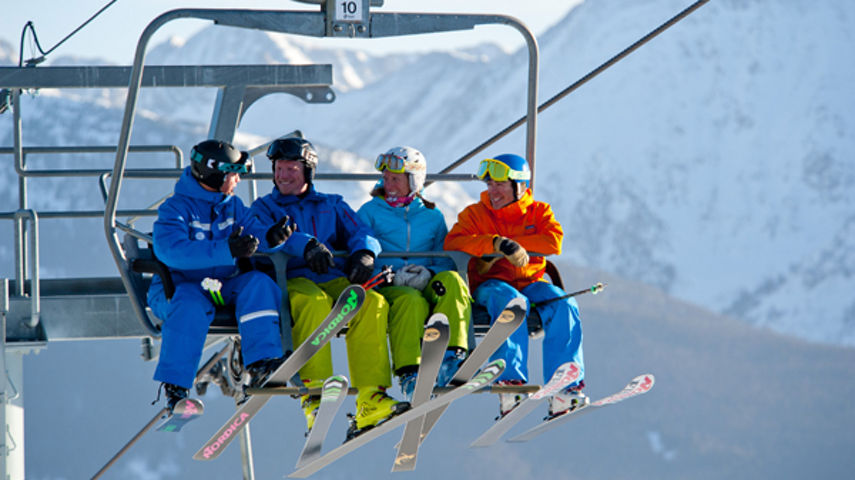
Getting On
Prep:
- Remove your pole straps from your wrists, gathering them in one hand. Secure any loose items like scarves and mittens, and remove backpacks.
- Line up with other passengers along the “Wait Here” board embedded into the snow.
- Communicate with the lift operator. If you are nervous, tell them. If you think you need assistance, tell them. If you just don't know exactly what to do, ask.
- After a chair passes, follow it and make your way to the “Load Here” board.
Look:
Look over your shoulder as the chair approaches.
Sit:
- Sit down when the chair touches the back of your legs, grasping the chair as needed.
- Lower the bar—first double checking that your chairmates are ready.
Relax:
Sit all the way back in the chair, scooting towards the backrest.
Riding the Chairlift
Pay Attention.
- Stay in tune with your surroundings to make for a more enjoyable ride.
- If you’re new to riding chairlifts, watch how others around you load and unload the chair—then mirror what works for them!
- If you haven’t used a chairlift before ask a uniformed employee for directions and assistance.
Look for Signs. Read them.
Our signage has lots of tips, information about the terrain the lift serves, and warnings about the skill level for the terrain served by the lift.
Keep Calm and Ride On
- Do not lean forward while riding the lift. If the lift stops, don’t worry, it happens! Instead, enjoy the extra time to plan out your next run.
- Lower and use the chair bar, but ask your chairmates before you do so.
Unloading
- Do not try to slow down or stop as you push away from the chair.
- Keeping your skis/snowboard pointed downhill to help you glide away from the chair. If you ride a snowboard, keep your back foot on the board (but don't try to skate away from the chair).
- Clear the unloading zone quickly. Do not strap into your snowboard in the unloading zone.

How To: Kids on Lifts , opens in a new window
Chairlifts and children: fortunately, there is only one first time. Even though teaching your children to get on the chairlift can be a little tricky, just a little coaxing and coaching goes a long way.
If this is your first time loading a lift, make sure you ask the lift operator to slow down the chair—and don’t forget to review our pointers below!
Loading
- Before using a chairlift, start your kids at the magic carpet so they can get familiar with the sensation of being carried.
- Organize the little ones: talk through and watch the steps of getting onto the lift with your child before you get in line.
- Ask a uniformed employee is there is a practice chair so your child can understand how the chair works.
- Take them to a beginner area chair lift and show them how other kids load the chair properly.
- Talk to the lift operator: let them know before you load that you might need help.
- Make sure younger kids know how to use their hands to push their rear ends to the back of the chair. They might need to grab the chair or the bar. Be prepared to give them a boost!
- Line children up so they are closest to the lift operator when loading.
- If you are the parent or adult riding with children, position yourself directly next to the child or in the middle position if you are riding with more than one child.
On the Lift
- Make sure the chairbar is down.
- Remind your children they could fall off the lift if they engage in horseplay or do not sit still.
- Do not remove gloves, poles, helmets or other accessories.
- If you (or your child) does drop something, let it fall! You can retrieve your lost item on your next lap, and if you can’t find it, notify the lift operator about the missing item at the lift’s base.
Unloading
- Request a slower unload: signal to the lift operator as you approach the unloading zone.
- Help your children get to their feet, steering them downhill. If the child has a vest or handle use it to assist them if needed.
- Clear the loading zone as quickly as possible.
Would you like to give your children a leg up on riding the left? Try a lesson with one of our expert Ski & Ride School instructors!
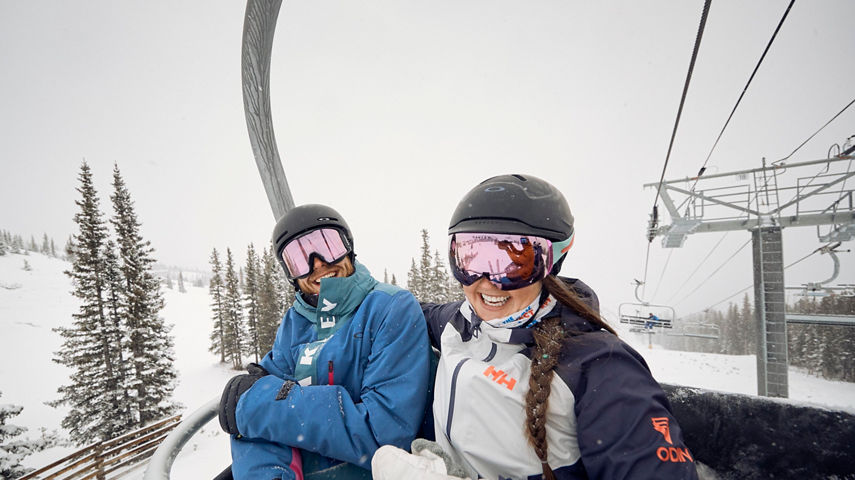
Chairlift Guidelines , opens in a new window
Obey All Signage
Signs may be instructive, informative, or warnings; read and obey the information shared on them .
Heed the Lift Operator
Lift Operators are familiar with their operations , so listen up when they have something to share.
No Horseplay
Skiing and snowboarding may be all fun and games, but lift safety is a serious issue.
Ride Safely
Under Colorado law, you cannot board a lift unless you have sufficient physical dexterity, ability and knowledge to negotiate or to use such lift safely or until you have asked for and received information sufficient to enable you to use the lift safely. You may not use a lift or any ski trail when under the influence of drugs or alcohol.
Animals on Lifts
Pets are not allowed to use chairlifts for safety reasons.
A service animal can ride the chairlift as long as is harnessed, leashed, or tethered to the handler (owner) at all times while on the lift. The service animal must be unable to move on its own to help prevent the animal from jumping or falling off of the lift, potentially onto a person below, or posing a safety risk to guests or employees using the lift. In addition, the handler must be unhindered by the service animal and able to negotiate and use the lift safely, including loading and unloading the chair properly.
Where possible, it is strongly recommended that individuals with service animals access the gondola, which generally provides safer access than a chair lift for the handler, service animal, other guests and employees.
Want an in-depth look at the Vermont General Assembly Statutes governing chairlift use?
Frequently Asked Questions (FAQs)
The avalanche rescue dogs that Ski Patrol uses are rigorously trained search-and-rescue dogs and avalanche dogs. Outside of their rescue training, they undergo specific instruction for chairlift riding, socialization, and obedience. “Chairlift socialization,” or the training that rescue dogs undergo to be able to ride chairlifts, even begins as early as 8 weeks old!
Moreover, they are certified after training by credentialing organizations. As such, our rescue dogs aren’t just highly qualified work partners—they’re also highly qualified to ride chairlifts!
First, a note: all the information we’ve shared on this page pertains to riding chairlifts in the winter, since they are the primary means of guest transportation to skiable/rideable terrain within resort boundaries.
That said, we’ve listed a few more distinctions below:
Transportation Type: Gondolas are closed cabin lifts that can transport between 4 and 15 people, while chairlifts provide open-air transportation seating for up to 6 people.
Terrain Served: Our gondolas primarily provide guest access to key base, mid-mountain, and summit areas, while chairlifts tend to serve skiable/rideable terrain in a wider range of areas within resort boundaries. Gondola-served terrain may include areas accessible to foot traffic.
Activities Supported: Chairlifts enable many winter activities (i.e. skiing and snowboarding) as well as summer fun (i.e. mountain biking and hiking). Gondolas also support winter and summer activities, while also enabling guests to sightsee around our mountain without additional gear or equipment. Certain strollers, wheelchairs, or other mobility devices may also be used on gondolas.
Loading and Unloading Skills: Both chairlifts and gondolas require passengers to heed posted signage and instructions from the lift operator. Chairlifts tend to require more loading and unloading knowledge and skill than gondolas, regardless of the season.
If you’d like to explore on-mountain areas accessible to foot traffic you’ll need to take a gondola to visit these zones.
Please consult your trail map to find more options you can visit via gondola.
Lift closure varies on a case-by-case basis. Generally, chairlifts may close temporarily due to safety precautions related to maintenance or weather (which may not always be visible or obvious). The decision to shut down a lift is determined by Ski Area Management, which may include the managers of Lift Operations and Lift Maintenance departments, as well as the Director of Mountain Operations.
In the morning, lift open times may be delayed if snow safety and lift safety operations are underway.
using their own individual ability and knowledge.
That means 3 things:
- Your may not ski or snowboard with your baby in a backpack.
- You may not load chairlifts with a baby in a backpack (even in the summer).
- If you want to carry your baby in a backpack, use the gondola.